Exploring the World of French Cheese
Title: Exploring the World of French Cheese: A Gastronomic Journey
Introduction: France, renowned for its rich cultural tapestry, is also celebrated as a haven for cheese enthusiasts. The
country's diverse landscapes and climates have given rise to a remarkable variety of cheeses, each reflecting the terroir of its region.
French cheese is not just a culinary delight; it's a testament to centuries-old traditions and artisanal craftsmanship. From creamy
Camembert to pungent Roquefort, the world of French cheese is a sensory voyage that captivates the taste buds and ignites a passion for
gastronomy.
The Diversity of French Cheese: One cannot delve into the world of French cheese without marveling at its staggering
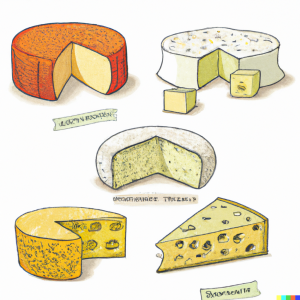
diversity. The country boasts over 1,200 different types of cheese, ranging from soft and velvety to hard and crumbly. Take, for example,
the iconic Brie, a mild and buttery cheese that hails from the Île-de-France region. Its delicate white rind encapsulates a luscious
interior, making it a staple at any sophisticated gathering. On the other end of the spectrum lies the robust Munster from Alsace, a piquant
cow's milk cheese with a distinctive orange hue and a powerful aroma. The sheer variety ensures that there is a French cheese to suit every
palate, making it a treasure trove for connoisseurs and novices alike.
The Art of Affinage: What sets French cheese apart is not only the quality of the raw ingredients but also the meticulous
art of affinage, the aging process that transforms cheese into a masterpiece. Roquefort, often hailed as the "King of Cheese," is a prime
example. Produced from ewe's milk in the caves of Combalou, its distinct blue veins and complex flavors develop through careful affinage,
creating a cheese that is both sharp and creamy. Comté, a raw milk cheese from the Jura region, undergoes a minimum of four months of aging,
resulting in a nutty and savory profile. These examples showcase the importance of time and patience in crafting French cheese, elevating it
beyond mere food to a cultural heritage that has stood the test of time.
Conclusion: In conclusion, exploring French cheese is not just a gustatory adventure but a journey into the heart of a
nation's culinary soul. The vast array of textures, flavors, and aromas reflects the diverse landscapes and traditions that make up France.
From the soft embrace of a Camembert to the bold character of a Roquefort, each cheese tells a story of craftsmanship and terroir. So, the
next time you savor a piece of French cheese, remember that you're not just tasting a culinary delight; you're experiencing centuries of
passion, expertise, and the indomitable spirit of gastronomy.
Unveiling French Culinary Heritage
French culture, renowned for its sophistication and elegance, finds one of its most cherished expressions in its culinary
traditions.
This culinary tapestry has woven its way through centuries, leaving an indelible mark on the global gastronomic landscape. Let's delve into
the history of French cuisine, exploring its roots and savoring the essence of this cultural phenomenon.
Historical Roots:
The roots of French cuisine can be traced back to the Middle Ages when the French court was a hub of culinary innovation. During this
period, chefs sought to impress royalty with elaborate and meticulously crafted dishes. The fusion of local ingredients, inspired by the
court's diverse influences, laid the foundation for what we now recognize as classic French cuisine.
1. Ratatouille:
An iconic dish that encapsulates the history and soul of French culinary tradition is Ratatouille. Originating from Provence, this vegetable
medley traces its roots to the 18th century. Historically a peasant dish, Ratatouille showcases the ingenious use of locally available
vegetables like eggplants, zucchini, and tomatoes, reflecting the French commitment to simple, yet flavorful, cuisine.
2. Bouillabaisse:
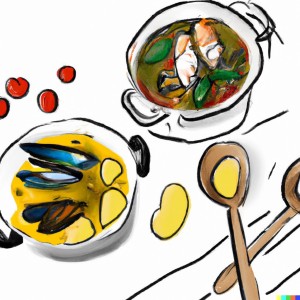
Venturing into the coastal regions of Provence, we encounter another culinary gem – Bouillabaisse. Historically a humble fisherman's stew,
this dish reflects the vibrant maritime culture of Marseille. Rooted in the 18th century, Bouillabaisse was created as a way to utilize the
day's catch that wasn't suitable for sale. Over time, it evolved into a delectable combination of various fish, shellfish, and aromatic
herbs, emphasizing the French commitment to resourcefulness and sustainability.
3. Crêpes:
Transitioning to the indulgent realm of French desserts, the humble crêpe takes center stage. Originating from Brittany, these thin pancakes
have a history dating back to the 13th century. Originally a simple, wheat-based dish, crêpes became more refined with the introduction of
white flour in the 20th century. Today, they showcase the French dedication to culinary innovation, as they are enjoyed with an array of
sweet or savory fillings, perpetuating the timeless allure of this culinary tradition.
In conclusion, French cuisine, deeply rooted in history, continues to captivate the world with its sophistication and diverse flavors. By
exploring the stories behind iconic dishes like Ratatouille, Bouillabaisse, and crêpes, we gain a deeper appreciation for the cultural
legacy that the French Alliance in KSA proudly upholds. .
Language app or language course ?
In my classes and around me, I often hear about online language learning apps. Language learning apps have received widespread praise and
are expected to transform the study of languages. They allow you to discover a language, at any time of the day or night, to practice on your own, and can be a very rewarding way to acquire basic vocabulary. But their effectiveness is debatable, particularly when it comes to
writing or speaking skills. As a French teacher, I asked myself the question:
Read More
How long does it take to learn French ?
As a French teacher, “how long does it take to learn French?” is a frequently asked question by my students. In my opinion, it differs from
one learner to another and it depends on a number of variables. However, let’s focus on the general scenario.
Read More
3 benefits of early learning
Nowadays, we hear a lot about early language learning. It is critical to be exposed to a foreign language at a young age. The earlier the
child begins to learn, the better. Several studies have found that at three years old, the child has the intellectual flexibility to
imitate, learn, and blend into the language and culture of the other. A child learns a new language by singing, playing, and having fun. These circumstances are ideal for encouraging learning and memorizing. Later on, adolescents develop remarkable absorption and cognitive
abilities. But what are the real benefits of early learning?
Read More
Feeling lonely learning online ?
Online courses have received a lot of attention in recent years. It is obvious that the benefits of online courses are numerous! They provide more flexibility, adjust to your pace and are quite practical. However, as a student, you might rapidly feel isolated and
discouraged... As a French teacher, here are 3 tips so that you no longer feel alone:
Read More
3 simple ways to overcome your fear of speaking a foreign language!
You have no idea where to start? Learn a few basic phrases, like greetings, saying "thank you" or ordering at the café or restaurant. Learn
how to ask and answer simple conversation questions: Where are you from? What do you do?
Read More
Why learn French?
The five continents are home to more than 300 million French speakers. Speaking French will help you get by in France, but not just that!
Knowing French also provides you access to nations where French is an official language, including Canada, Switzerland, Luxembourg, and
Belgium. French is also widely spoken in many African countries.
Read More
Why you should take a French placement test ?
You usually say "Je parle un peu français", you watch series and movie in French with subtitles and you feel you can get some of it ? You
learned French at school ? During a year abroad ? You feel that you have some capacities but you are not too sure about your level ?
Read More






.svg)